
A Scientist’s Approach to Science Fiction
- By Maggie Masetti
- October 3, 2012
- Comments Off on A Scientist’s Approach to Science Fiction
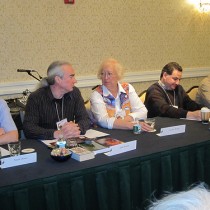
Meet Alan Smale – he’s currently the director of the High Energy Astrophysics Science Archive Research Center (we know that’s a mouthful and just call it the HEASARC) which is a part of the Astrophysics Science Division here at NASA Goddard, and he also performs research on black holes. He … Continue Reading →
A Mirror Milestone
- By Maggie Masetti
- September 28, 2012
- 1 Comment
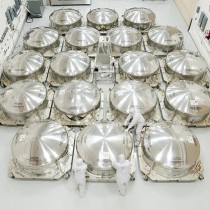
The James Webb Space Telescope, the scientific successor to the Hubble, will be the most powerful space telescope yet! This is partly due to Webb’s enormous primary mirror, which will have 18 segments that will work together as one. The flight primary mirror segments were recently completed, which means they … Continue Reading →
Infrared: Beyond the Visible
- By Maggie Masetti
- September 26, 2012
- Comments Off on Infrared: Beyond the Visible
As many of you know, aside from Blueshift, I work on the James Webb Space Telescope, which will be the successor the Hubble Space Telescope. It’s not a replacement, partly because Hubble isn’t going anywhere anytime soon, but also because the Webb is primarily an infrared telescope. Astronomers use something … Continue Reading →
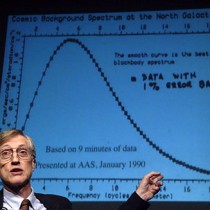
Ask a Nobel Laureate about James Webb Space Telescope science!
- By Maggie Masetti
- September 24, 2012
- Comments Off on Ask a Nobel Laureate about James Webb Space Telescope science!
Got a burning question about the science the James Webb Space Telescope will do? Because we’ve had some big news at NASA Goddard recently with JWST’s first two flight mirrors arriving to our cleanroom here, we’re celebrating! There will be a special tweet-chat Tuesday, September 25th from 2-3pm EDT with … Continue Reading →
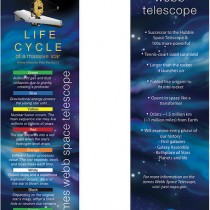
Try It At Home: Life Cycle of a Massive Star Activity
- By Maggie Masetti
- September 13, 2012
- Comments Off on Try It At Home: Life Cycle of a Massive Star Activity
Stars and planets form in the dark, inside vast, cold clouds of gas and dust. The James Webb Space Telescope’s large mirror and infrared sensitivity will let astronomers peer inside dusty knots where the youngest stars and planets are forming. The Webb telescope project has developed a bookmark and an … Continue Reading →
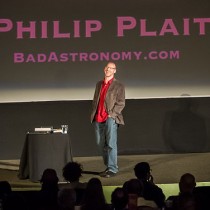
Podcast: Keeping Skepticism Alive, Part 1 of our Interview with “The Bad Astronomer,” Dr. Phil Plait
- By Maggie Masetti
- September 10, 2012
- 1 Comment
Click to listen! (9MB MP3, right-click to save) Transcript (Text, PDF) At its heart, science is about asking questions – looking at the universe around us and asking, “How? Why?” Science takes our natural curiosity and adds structure and rigor, examining things methodically to answer our questions and ask the … Continue Reading →
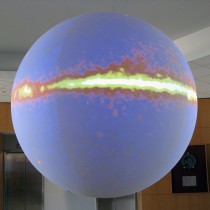
Science on a Sphere
- By Maggie Masetti
- August 27, 2012
- 3 Comments
One of the things you can see if you visit NASA Goddard (or dozens of museums and other institutions worldwide) is a 68-inch sphere on which moving images are projected – it’s called “Science on a Sphere.” Goddard has one on display in its Visitor Center, and there’s also a … Continue Reading →
Want to get a postcard from Blueshift?
- By Maggie Masetti
- July 20, 2012
- 2 Comments
Guess what! We’ve turned 5! NASA Blueshift released its first podcast in 2007 (we’d like to think that our podcasts have vastly improved since those early episodes), and we’ve steadily expanded to blogging, tweeting, and keeping up with social media to find the best ways to bring the Universe closer … Continue Reading →
Try It At Home: Build-It-Yourself: Satellite launches!
- By Maggie Masetti
- July 18, 2012
- Comments Off on Try It At Home: Build-It-Yourself: Satellite launches!
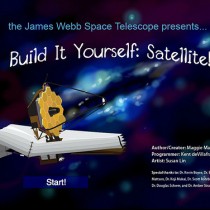
I wanted to thank all you Blueshift readers (especially a few of our Facebook followers) who were really helpful at offering me feedback for my new game. We’ve made a bunch of changes and released the final result! If you played an earlier version, please give the latest one a … Continue Reading →
Ring Around the Moon
- By Maggie Masetti
- July 10, 2012
- Comments Off on Ring Around the Moon
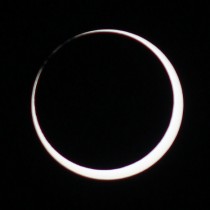
It all started when my friend Craig mentioned that there was an upcoming annular eclipse that would be visible from the US. And that maybe we should go to Portland to visit it. Or better yet, Arizona, where the skies would be much more likely to be clear! Solar eclipses … Continue Reading →